Coffees from Kenya are typically sought-after in the world of specialty coffee because of their juicy, vibrant yet clean, complex and crisp cup profile. Think notes of currant, berries, stone fruit, citrus fruit as well as florals. Of course, there are many different flavor profiles to be found in coffees grown in Kenya and we have been featuring a wide variety of Kenyan coffees over the years.
The country is quite unique in how coffee production is conducted as well. Though things may have changed more and more recently, a good part of Kenya's coffee production works in a similar way. Similar to other East African countries, coffee is often grown and harvested by smallholder farmers, who cultivate just a few hundred coffee trees or less.
The post-harvest processing is then done at so-called factories, most of the time with a very specific version of the washed method, also called double fermentation. After the harvest, the coffee flows through a series of interconnected channels and tanks.
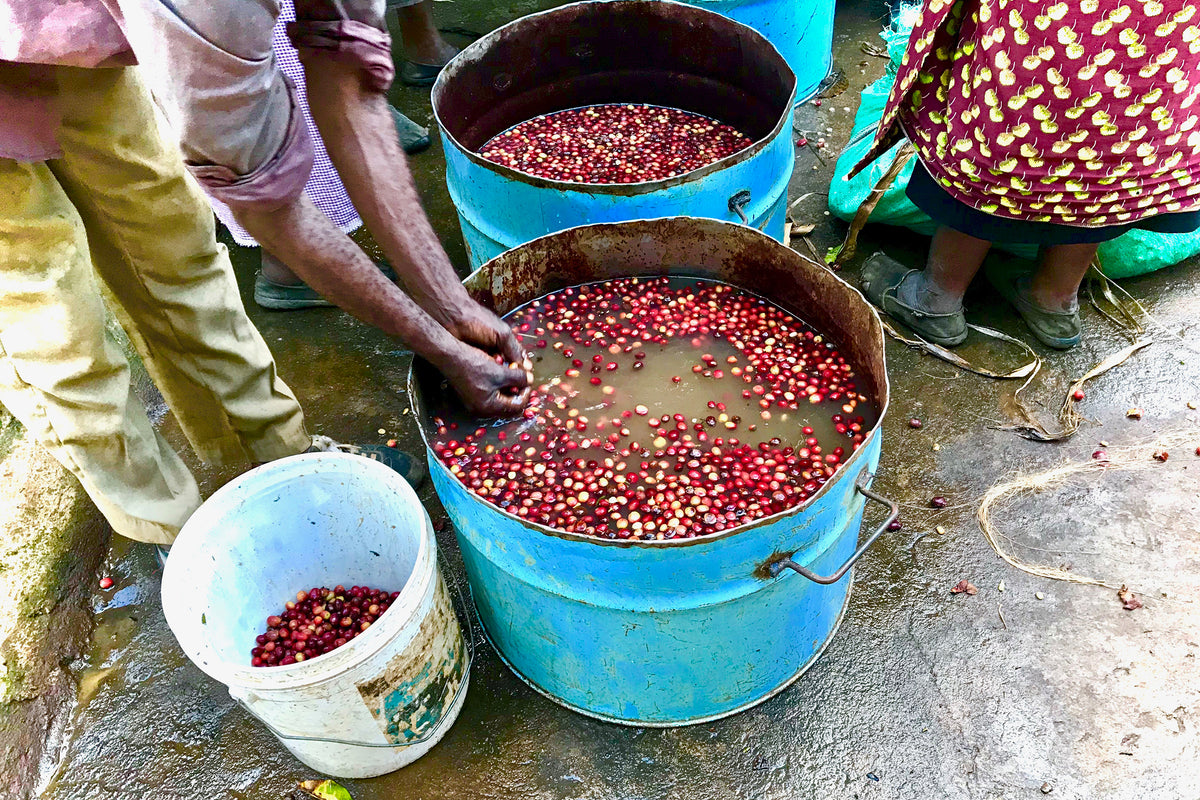
First, the coffee cherries are pulped – meaning the beans are extracted from the fruit – and moved through channels by water to reach the first fermentation tanks. The mucilage-covered beans are then fermented for usually 12 to 24 hours, followed by a washing process to rinse them off. These two steps, the fermentation and washing, are repeated, which is where the term «double fermentation» comes from. During these stages, coffee cherries floating on top are removed.
Once the second washing is complete, the coffee is dried on raised beds. The drying process is usually done in two stages: first, the beans are spread out in thicker layers to quickly reduce the moisture content, and then in thinner layers to further reduce moisture and complete the drying.
While this process helps produce exceptional coffees, it does have its drawbacks, primarily its high water usage and labor-intensive nature. In our Kenya travel report, we cover the whole process and other topics in more detail. In recent years, an increased number of coffees has been processed as naturals, saving a lot of water, as opposed to the above described washed method.
Since the 1930s, Kenyan coffee has been traded at the Nairobi Coffee Exchange, where it's sold to the highest bidder each Tuesday, though in recent years, more coffee has been sold outside the auction system.